

I love taking photos.
Not in any professional capacity — just travel photos, sometimes I’ll take my camera around the city.
This one’s from a work trip I took last year:
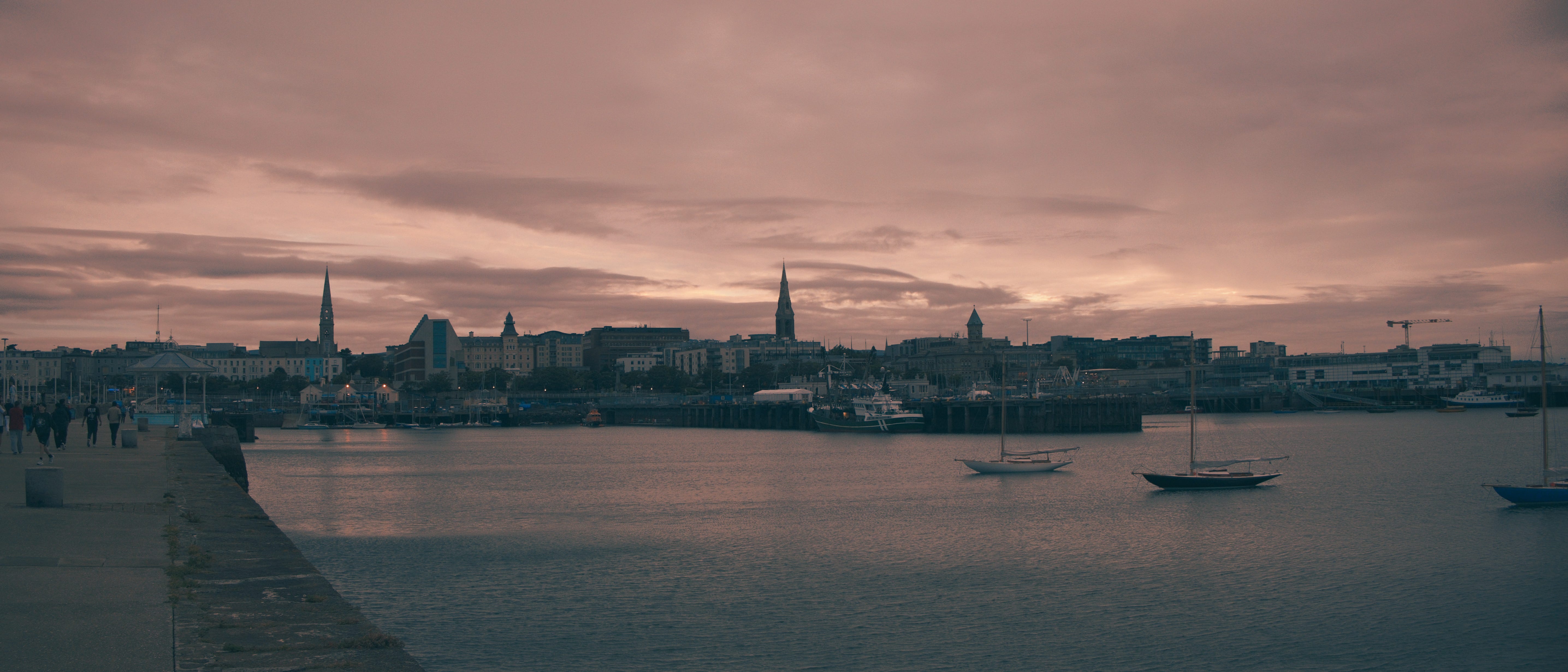
Here’s the thing though — only half the magic happens in the camera. The other half happens in the edit.
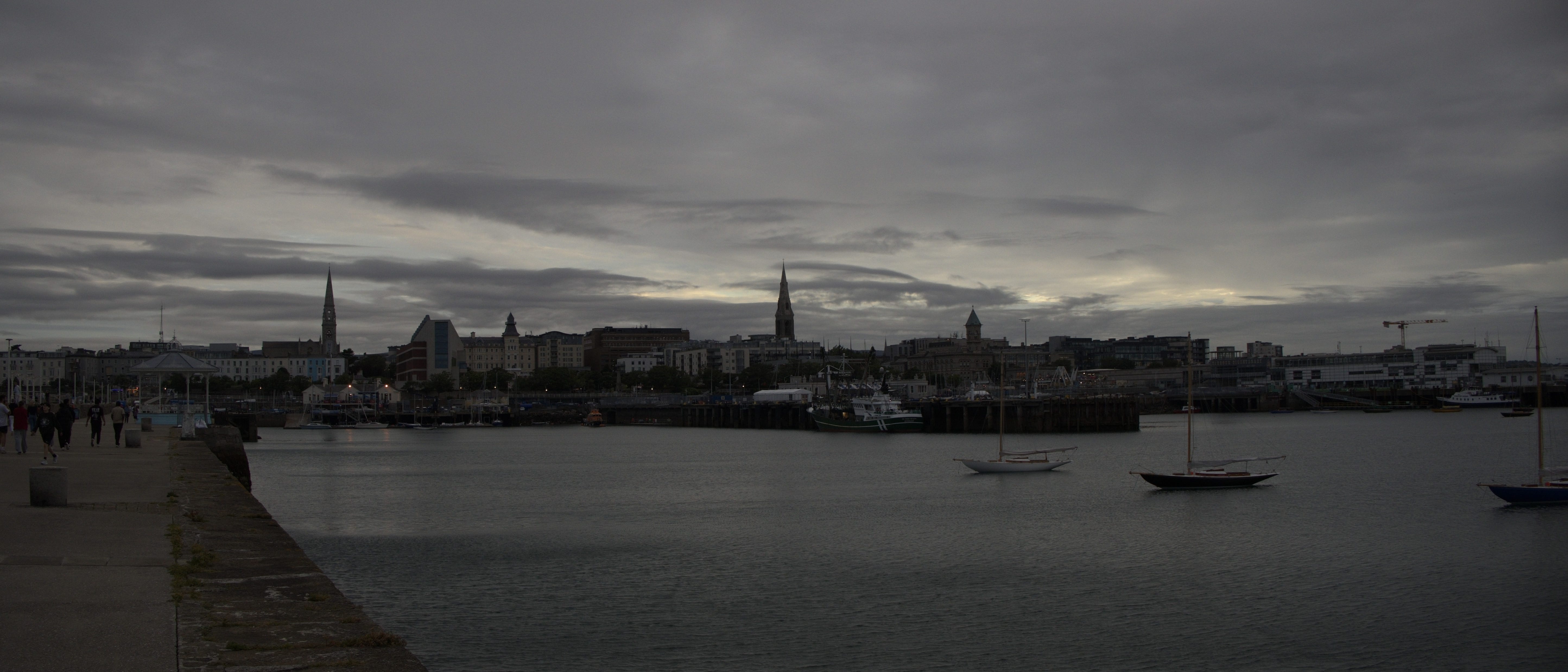
The problem though, is Adobe Lightroom1.
Or, I guess, it’s the price.
Adobe Lightroom runs on a subscription costing $18/month2. Want Photoshop too? $30/month. Maybe that’s fine if photography’s your job — I suppose I do pay $20/month for Claude.
But photography isn’t a job for me. It’s a hobby.
And that’s assuming I actually cancel every time. Given the friction of constantly re-subscribing, cancelling, and re-activating, I’m paying $18 whether I open it or not.
That $18 is also not always $18. If you’re not paying attention, you get steered into the $12/month “annual paid monthly” plan — cancel a month in and you get hit with a fine worth 50% of your remaining payments. Adobe finalized a $150 million settlement with the DOJ over exactly this practice.3
And so, for as long as I can remember, I would search for alternatives.
For Lightroom, that meant using Darktable4 or RawTherapee5. Feature-wise, there’s nothing they don’t support. But they drain your soul every time you open them. One Reddit comment put it better than I can:
“It’s more intuitive to pilot a spaceship than using RawTherapee or Darktable. RapidRaw beats them easy.”6
A Summer Project
I discovered RapidRAW7 a couple months ago.
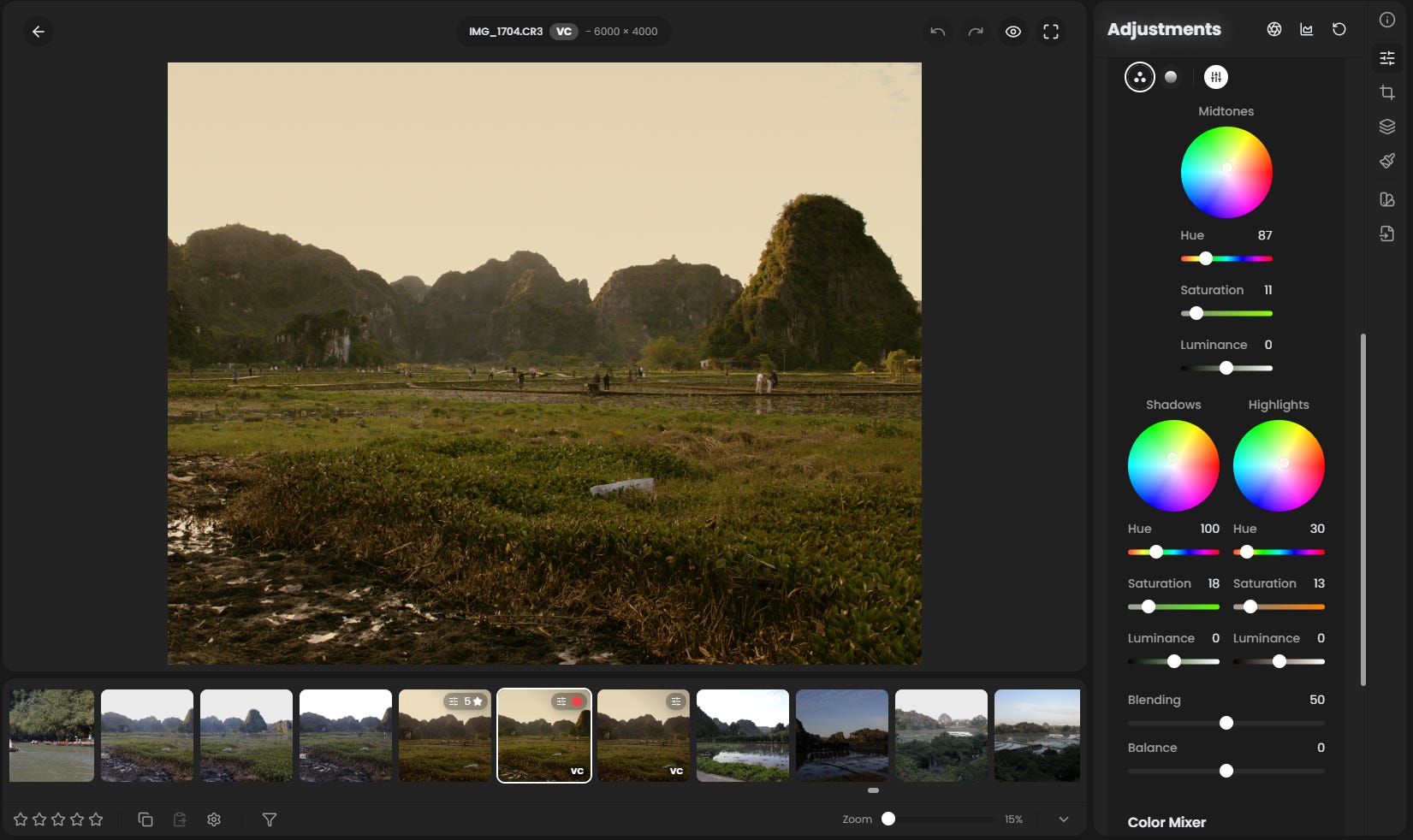
It has all the bare bones things you’d expect — tonal sliders, curves, white balance, colour mixer, colour grading wheels, sharpening, local masking, photo tagging. It includes things you wouldn’t expect — community presets, AI masking, AI erasing, importing LUTs.
AND, and this is big: It’s just fun to use. It’s by far the best UI/UX I’ve used in open-source software in a long time. No searching around a dozen menus to find features, no lag when you touch sliders. You don’t need a 5 hour YouTube tutorial to learn RapidRAW.
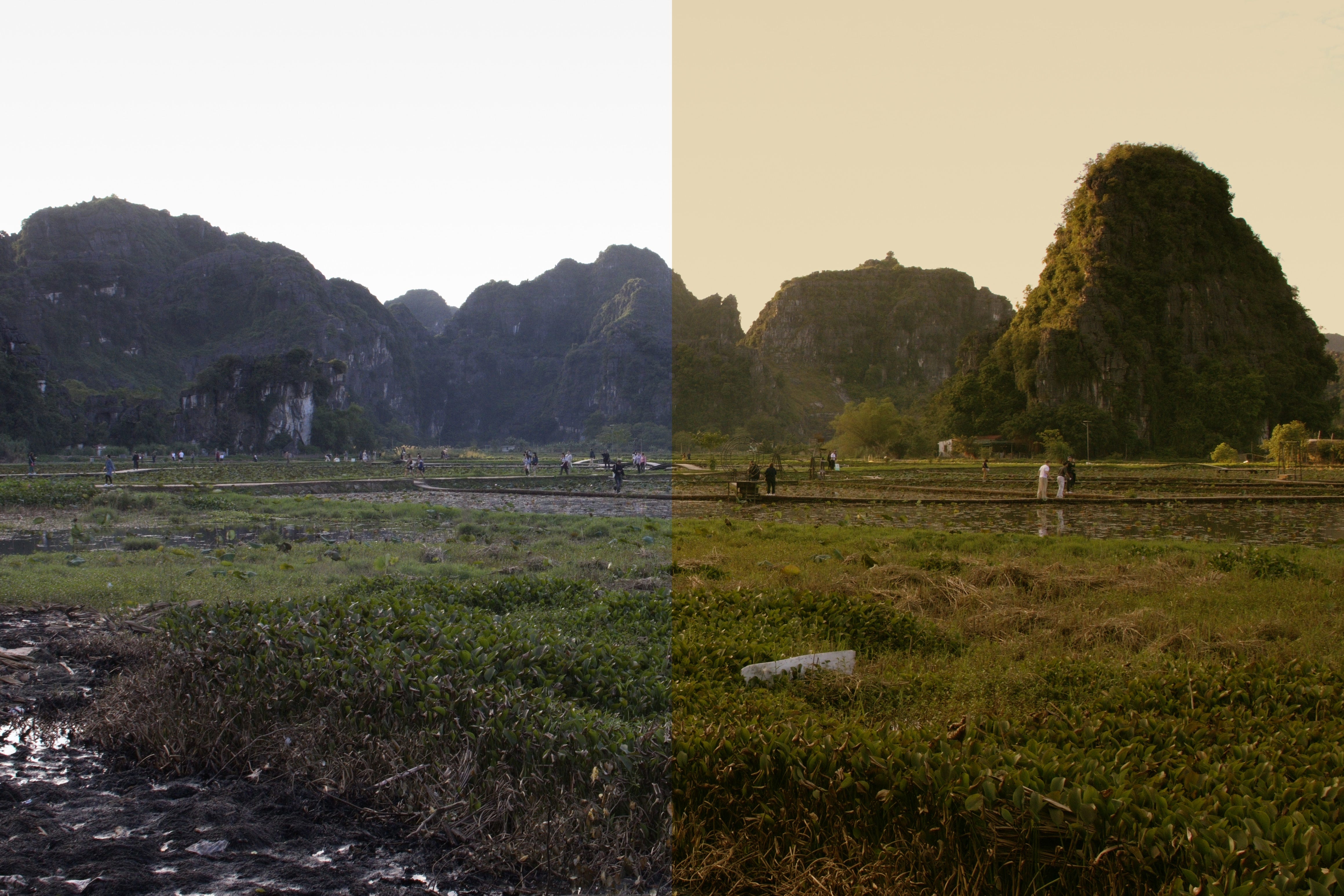
Those pictures I showed earlier? They were edited in RapidRAW.
It started as one 18-year-old’s pet project, frustrated with how laggy Lightroom was — built in two weeks, using AI as a research partner to implement image-processing math he’d never studied.8
Darktable, considered the gold standard of open-source Lightroom alternatives, sits at 12.9k stars on GitHub after 15+ years of development. RapidRAW? 9.2k in just over a year. Feature-wise it’s not there yet. But people are paying attention.
The Playbook
Adobe's been around 44 years. Free alternatives have existed for just as long. Why would this one matter?
Adobe started with PostScript. A programming language used to define what to print. For a while, they built things — Illustrator, Premiere, Acrobat, InDesign, one after another through the 90s.
They licensed the rights to distribute Photoshop in 1988. Then, in 1995, once it had become the industry standard, they bought the rights to it outright for $34.5 million.
That became the standard.
Every time something threatened to get in Adobe’s way after that, the fix was the same: buy it.
Macromedia (Flash, Dreamweaver, Fireworks) in 2005. Omniture in 2009. Then Magento, Marketo, Frame.io.
In 2023 they tried it with Figma. $20 billion — the biggest swing yet. This time, fearing a near-monopoly, EU and UK regulators said no. Adobe was forced to walk away a billion dollars poorer for trying.
Last year, Adobe posted record revenue — $25.2 billion. Record profit too.9
The stock's down 23.5% anyway, and Narayen, CEO for eighteen years, stepped down. Wall Street’s worried about AI.
I am too.
Just not in the same way: they’re worried about AI replacing their tools.
I’m worried about AI building their tools.
Open-Source Software Can’t Be Bought
And in a world where AI can build a reasonable, free, open-source competitor to your software in a matter of weeks, what exactly are you charging $18 a month for?
The formula behind Photoshop, Premiere, Illustrator, InDesign — it’s all known. None of it is a secret. The only reason nobody’s built an open-source competitor is because of the effort it would’ve taken without AI.
DaVinci Resolve is free because Blackmagic sells the cameras. Canva can give away Affinity because Canva’s own subscriber base pays for it somewhere else.
Adobe does have another business — Experience Cloud, the marketing empire built on Omniture and Marketo. It could subsidize Creative Cloud with it. For now, it doesn’t.
Though, unlike other clouds, there’s not really much cloud in Creative Cloud.
There’s no shared infrastructure like Amazon Lambda, where you pay per execution instead of running your own server 24/7. There’s no managed database like Google’s BigQuery, where you’re renting capacity instead of owning hardware.
For the sliders and curves — the part most people pay for — there’s no infrastructure, no backend, no compute behind it that RapidRAW couldn’t replicate.
You’re paying a subscription for login access.
So if you’re selling software in 2026, ask yourself, what’s behind the frontend?
Adobe has spent 44 years buying their way out of exactly this problem. This time, there’s nothing to buy.
Super popular photo editing software. If you haven’t heard of it, pretend I’m talking about Photoshop.
From the original FTC complaint and DOJ press release.